Kuwaiti Girls’ School: Sept. 13, 2001

Many veterans of the Gulf War have expressed concern that their unexplained illnesses may be a result from their experiences in that war. In response to veterans’ concerns, the Department of Defense established a task force in June 1995 to investigate those incidents and circumstances relating to possible causes. The Office of the Special Assistant to the Deputy Secretary of Defense for Gulf War Illnesses assumed responsibility for these investigations on Nov. 12, 1996. Effective April 5, 2001 this office became the Office of the Special Assistant to the Under Secretary of Defense (Personnel and Readiness) for Gulf War Illnesses, Medical Readiness, and Military Deployments, with continued responsibility for Gulf War issues. In early 1997, the British Government established a Gulf Veterans’ Illnesses Unit within the Ministry of Defence to coordinate the United Kingdom’s response to issues related to their own Gulf veterans’ illnesses. In July 1997, the British government published a policy statement pledging to investigate incidents where chemical or biological warfare agents were alleged to have been present or detected.

As part of the effort to inform the public about the progress of its efforts, the U.S. DOD and the UK Ministry of Defence are publishing (on the Internet and elsewhere) accounts relating to particular incidents that Gulf War veterans have reported and that could have a bearing on the illnesses now being suffered by Gulf War veterans, along with whatever documentary evidence or personal testimony was used in compiling the accounts. The narrative that follows is such an account. It updates the previous narrative that had been coordinated with several key individuals involved in events at the Kuwaiti Girls’ School. U.S. personnel who directly coordinated with us on the original narrative’s production were Lt. Col. Michael Johnson, Lt. Col. Donnie Killgore, and Col. (Ret.) John Macel. UK coordination included the sampling team leader, Maj. Jonathan Watkinson, and the British soldier injured during testing. While these individuals directly reviewed and commented on draft versions of the original document, numerous others provided key information that helped us provide a more comprehensive view of events surrounding the Kuwaiti Girls’ School. We appreciate their assistance and encourage others with additional information to contact us.

II. Summary

In early August 1991, personnel from Passive Barriers Limited, a British explosive ordnance firm, discovered a storage tank believed to contain chemical warfare agent next to the perimeter wall of the Kuwaiti Girls' School in Kuwait City, Kuwait. Witnesses described the tank as emitting brown vapors through two bullet holes in the tank. Initial field tests suggested the possible presence of mustard agent, but the results were inconclusive. American and British military personnel conducted four operations in August 1991 to determine if the tank contained chemical warfare agent and to permanently seal the holes in the tank.

Maj. Jonathan Watkinson, commander of the 21st Explosive Ordnance Disposal Squadron, British Royal Engineers, commanded joint British and American operations to identify the contents of the tank. He used several types of chemical warfare agent detection equipment including a Chemical Agent Monitor, both one- and three-color chemical warfare agent detector papers, and an M18A2 chemical warfare agent detection kit. The Chemical Agent Monitor registered 8 bars, a positive result, for mustard agent. The chemical warfare agent detector papers and the M18A2 kit produced inconclusive results. After Major Watkinson's initial tests, two Fox nuclear, biological, and chemical reconnaissance vehicles sent to the girls' school initially alerted for the possible presence of the chemical warfare agents mustard and phosgene. MM-1 initial alerts, however, do not verify the presence of chemical warfare agents. The Fox crews took additional steps, known as spectrum analyses, that disproved the initial results of mustard and phosgene but indicated the presence of an unknown substance.

To confirm the presence or absence of chemical warfare agents in the tank, a British sampling team extracted liquid from the tank for laboratory analysis. The samples remained in the custody of the sampling team or an authorized individual until delivered to the Chemical and Biological Defence Establishment at Porton Down, United Kingdom. The United Nations had designated the laboratory at Porton Down as a preeminent authority to analyze samples of chemical warfare agents sent from Iraq. Scientists at the Chemical and Biological Defence Establishment produced an initial report on the laboratory analyses of the samples taken from the tank. Their 1991 initial report stated that the samples were consistent with the tank containing nitric acid and there was no evidence of any chemical warfare agent in the tank.

In 1994, the tank found at the Kuwaiti Girls' School became a focus of government and media scrutiny in the U.S. and the United Kingdom when veterans and the general public feared possible exposure of soldiers to chemical warfare agents. The American public and Gulf War veterans suspected Iraq's chemical warfare agent inventory could be a possible cause of reported undiagnosed illnesses in Gulf War veterans. A contemporary press article that appeared in the British newspaper, The Sunday Observer, reported the 1991 discovery of a container full of mustard agent in Kuwait City, Kuwait. The U.S. Senate Committee on Banking, Housing, and Urban Affairs launched an investigation to determine if in fact the tank contained a chemical warfare agent, thus possibly exposing military personnel. The Senate committee reviewed documentation and interviewed U.S. military personnel who participated in the testing or sampling of the tank's contents at the Kuwaiti Girls' School. Although some of the initial results of Major Watkinson's field tests using various types of chemical detection equipment supported the Senate committee's conclusion that a chemical warfare agent may have been present in the tank, laboratory and Fox vehicle analysis did not. Despite the laboratory evidence to the contrary, the Senate committee disagreed with the DOD and concluded publicly that chemical warfare agent had been present in the storage tank. In the United Kingdom, parliamentary questions born out of the U.S. Senate committee's declaration have repeatedly been raised.

In 1997, the DOD commenced a joint investigation with the Ministry of Defence in the United Kingdom. This investigation revealed new evidence confirming the tank did not contain a chemical warfare agent, but most likely contained nitric acid. This evidence included copies of the two Fox vehicles' MM-1 mobile mass spectrometer tapes produced at the tank site on Aug. 9, 1991. Chemical experts at the Edgewood Research, Development, and Engineering Center, mass spectrum experts at the National Institute of Standards and Technology, and the manufacturer of the MM-1 mobile mass spectrometer all analyzed the mass spectrometer tapes produced at the tank site. They concluded definitively that the tank did not contain chemical warfare agent, but indicated the presence of nitric acid.

The liquid samples extracted from the tank at the Kuwaiti Girls' School provide physical evidence that the tank did not contain chemical warfare agent, but did contain nitric acid, most likely inhibited red fuming nitric acid. We acknowledge that the tank probably did not contain pure nitric acid, but more likely contained a mixture of nitric acid and other unknown substances or contaminants as a result of exposure to the environment (for example, water, sand, and pollutants). The tank emitted brown-colored fumes, indicating the tank contained red fuming nitric acid, which is composed of nitric acid, water, and several forms of nitrogen oxide. We also believe the tank contained an inhibitor due to the lack of corrosion of the tank as described by eyewitnesses. However, because the liquid sample was not tested specifically for an inhibitor, we cannot confirm with certainty what inhibitor, if any, was in the tank. Therefore, we conclude that the tank contained nitric acid-most likely inhibited red fuming nitric acid. This chemical is an oxidizer used in Seersucker missiles that were maintained at the girls' school.

On Aug. 5, 1991, Kuwaiti military officers tasked the British firm, Royal Ordnance, to examine the tank at the Kuwaiti Girls' School. On loan to Royal Ordnance specifically to conduct ordnance disposal operations, the 21st EOD Squadron, British Royal Engineers, commanded by Maj. Jonathan Watkinson, set out to investigate the tank. At the same time, a U.S. Brigadier General in Riyadh, Saudi Arabia, tasked the commanding officer of the U.S. 146th EOD Detachment to investigate the tank, and expressed concern that the tank "possibly contained mustard agent."[19] In 1997, Maj. Watkinson described this assignment:

I attended a meeting on the 5th of August [1991] with the Kuwaiti Ministry of Defence which was a regular meeting, between Kuwaiti Army Officers and various agencies in Kuwait, who were involved in EOD operations. It was at that meeting that I first became aware of the container, because one of the Kuwaiti officers specifically asked Royal Ordnance if they could investigate it. A member of the Royal Ordnance management team was at that meeting and they immediately referred the problem to me to investigate, which I subsequently did...[20]

On Aug. 5, 1991, the commanding officer of the U.S. 146th EOD Detachment reported that he accompanied Maj. Watkinson to the Kuwaiti Girls' School to examine the tank and search the site for additional tanks and other suspicious items.[21] However, Maj. Watkinson does not recall any U.S. personnel being present during his initial testing of the tank, nor does he mention any U.S. personnel in his post-operation report. Maj. Watkinson's report mentions only the Bomb Disposal Engineer with him at the school on this occasion.[22]

At the Kuwaiti Girls' School, Maj. Watkinson located the metal storage tank outside the perimeter walls of the school. Maj. Watkinson described the tank as having a capacity of approximately 2000 liters.[23] No one informed Maj. Watkinson or any other individual sent to the school of the earlier assessment by the safety officer that, based on the color and smell of the fumes, the tank may have contained nitric acid.

Dressed in full individual protective clothing (Figure 9), Maj. Watkinson conducted several tests of the fumes emitting from the tank. He used several chemical warfare agent detectors including a Chemical Agent Monitor (Figure 10), British one-color detector paper (Figure 11), and an M18A2 kit (Figure 12).[24] Following standard practice, he limited the number of persons in the contaminated area, so the Bomb Disposal Engineer maintained radio contact at a safe distance from the tank and fumes.[25]
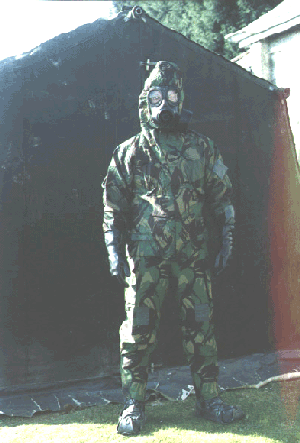
Figure 9. Photograph of British NBC suit provided by UK Ministry of DefenceFigure 9. Photograph of British NBC suit provided by UK Ministry of Defence
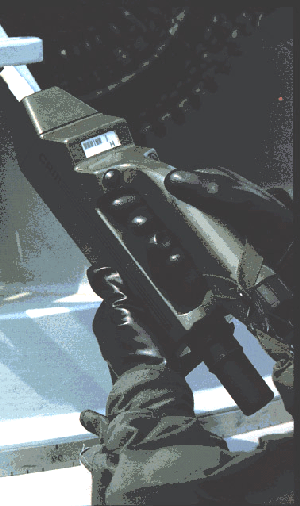
Figure 10. Photograph of Chemical Agent Monitor provided by UK Ministry of DefenceFigure 10. Photograph of Chemical Agent Monitor provided by UK Ministry of Defence
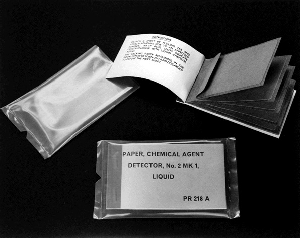
Figure 11. Photograph of British one-color detector paper provided by UK Ministry of DefenceFigure 11. Photograph of British one-color detector paper provided by UK Ministry of Defence
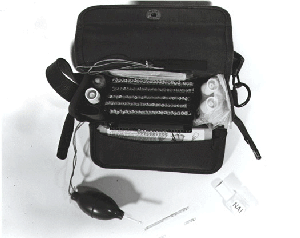
Figure 12. Photograph of M18A2 chemical agent detector kit provided by UK Ministry of DefenceFigure 12. Photograph of M18A2 chemical agent detector kit provided by UK Ministry of Defence

Maj. Watkinson first used the Chemical Agent Monitor to test the vapors. The CAM is a portable, hand-held instrument used to monitor the presence of nerve or blister agents.[26] Maj. Watkinson obtained a positive result for the presence of mustard agent when he used the CAM to test the vapors. It reflected eight bars, the highest possible reading for the presence of mustard agent. Maj. Watkinson did not know about a U.S. message dated Feb. 19, 1991, stating, "Fuming nitric acid will drive the CAM to eight bars on the mustard scale." This message originated following field tests where CAMs tested wreckage from a Scud missile that impacted near Hafir Al Batin, Saudi Arabia. The report warned operators that fuming nitric acid might cause the CAM to register a false positive for blister agent.[27]

After the CAM indicated the possible presence of mustard agent, Maj. Watkinson then tested the fumes with one-color detector paper. The paper produced no response. One-color detector paper is designed to analyze liquids, so we would not expect it to react when exposed to a vapor. Next, Maj. Watkinson extracted a small liquid sample from the tank by inserting a piece of wire through one of the bullet holes in the tank. He then wiped the wire on the one-color detector paper. If the liquid was a chemical warfare agent, the British one-color detector paper should have turned blue. However, the liquid turned the detector paper brown, a negative response for chemical warfare agent. The U.S. three-color detector paper also changes colors in the presence of chemical warfare agents: blister agent turns the paper red, G-series nerve agent turns the paper yellow, and V-series nerve agent produces a green color. When Maj. Watkinson tested the liquid on the three-color paper, the paper turned pink, which he believed signified a positive result for mustard agent.[28] Maj. Watkinson testified that "Both the one color and three color detector paper changed color, but the colors weren't entirely appropriate with the color that I would have expected. So, that was a positive result, but with question marks."[29]

The inconsistency in the test results using the CAM and detection papers led Maj. Watkinson to retest the tank's contents using an M18A2 chemical warfare agent detection kit. The M18A2 kit is a portable kit designed to test both liquid and vapors. Maj. Watkinson extracted vapors from the tank through glass tubes using a rubber bulb. He described the method he used with the M18A2 kit:

The M18A2 kit has glass tubes that contain sort of a cotton wool type substance, which is impregnated with certain chemicals. Obviously there are a whole series of different tubes, which are designed to detect for different agents. One can go through those tubes in sequence, in order to eliminate various chemicals and decide what it is you've got. I didn't go through that process fully, because I got a reading with the CAM and therefore I narrowed straight in on the H [mustard] agent.[30]

Maj. Watkinson tested the vapor six times using the M18A2 kit. In the presence of a chemical warfare agent, the kit shows distinctive color changes, specifically blue for mustard agent.[31] Four tubes changed colors to blue immediately; the remaining two tubes turned yellow initially, but turned blue some hours later.[32] Maj. Watkinson stated that, although the M18A2 detector kit produced a positive result, they were not as conclusive as he would have liked.[33]

1. Maj. Watkinson's Injury

While testing the sample extracted from the tank, Maj. Watkinson inadvertently came into contact with the liquid.

There was some of the liquid on the wire, which I then wiped onto the detector paper. I can only assume that in the process of doing that, I got some of the liquid onto the back of my thigh, and it went through my suit... It wasn't something that I was immediately aware of. In fact, it wasn't until I got back to the camp that evening that I noticed I'd been burnt. But it wasn't particularly painful; it was more a question of being uncomfortable.[34]

Maj. Watkinson noted that the burn on his thigh was just a red mark approximately 4 centimeters by 2.5 centimeters[35] and did not blister.[36] He received medical attention for the burn on Aug. 9, 1991, four days after he sustained the injury. According to the medical report, the burn did not blister but turned very red. The burn responded well to treatment with sulphadiazine cream[37] and completely healed within 7 to 10 days.[38] Maj. Watkinson provided the following statement about his injury:

The significance of the injury is...relevant, because I was dressed in all the full NBC [nuclear, biological, and chemical] protective equipment, and I at the time couldn't understand how I managed to get burned on a part of my body where there was no joint in the NBC clothing. The implication was that the chemical had gone through the NBC suit. This was a bit of a concern, because obviously our NBC suit was designed to protect us and clearly on this occasion it hadn't.[39]

Maj. Watkinson sealed both bullet holes with industrial silicone filler and plaster of paris bandages. He then checked the tank again for leaks using the CAM but found none.[40]

2. Maj. Watkinson's Initial Report

Despite conducting several tests using a CAM, an M18A2 kit, and one- and three-color detector paper, Major Watkinson was unable to identify with certainty the substance in the tank. The CAM and the M18A2 indicated the possible presence of mustard agent; the one-color detector paper turned brown denying presence of mustard agent, and the three-color detector paper changed colors but did not confirm mustard agent. Major Watkinson summarized the results of the initial test of the tank's contents as follows:

As far as I'm concerned, the CAM test was positive. It was eight bars on H. [mustard]. Both the one-color and three-color detector paper changed color, but the colors weren't entirely appropriate with the color that I would have expected. So, that was a positive result, but with question marks. The M18A2 detector kit gave test results, which again could have been interpreted as positive, but wasn't as conclusive as one would hope.[41]

Following his initial testing activities, Maj. Watkinson met with Kuwaiti and British military personnel, Col. John Macel, the Chief of the U.S. Office of Military Cooperation in Kuwait, and the chief of staff for U.S. Task Force Victory, Lt. Col. Donnie Killgore, to determine an appropriate course of action for disposition of the tank and its contents. The initial proposal was to transport the tank to an isolated location in the desert and destroy it. However, it was known that a United Nations chemical weapons evaluation team was in Iraq to inventory and assess Iraq's chemical weapons capability. The container would be useful to the United Nations efforts because if the container did contain chemical warfare agent, it would demonstrate Iraq's forward deployment of bulk chemical warfare agent. It was agreed to arrange for a UN team to take samples from the tank.[42]

At the same meeting, Lt. Col. Killgore suggested the Fox nuclear, biological and chemical reconnaissance vehicles assigned to the 11th Armored Cavalry Regiment test the tank's contents. Although the CAM and other chemical detection kits indicated the possible presence of a chemical warfare agent, the Fox vehicle's MM-1 mobile mass spectrometer is able to identify 60 known chemical warfare agents by their molecular composition and weight of ions.[43] Lt. Col. Killgore believed the Fox vehicle could more accurately assess the presence of chemical warfare agent in the tank.[44]

After Maj. Watkinson reported the results of his initial field tests, the commander of the U.S. 146th EOD Detachment received information that raised doubts that the tank contained mustard agent when representatives of the Kuwaiti Ministry of Defence and various agencies conducting ordnance disposal discussed the possibility that the tank may contain a highly reactive industrial chemical. Also, the 146th EOD commander showed a picture of the tank to an Egyptian EOD officer, reportedly trained in Soviet rocketry. The Egyptian officer told the commander that the tank at the Kuwaiti Girls' School was the same type used by the Soviets to store rocket fuel, but this conclusion was not documented.[45] Colonel Macel stated that he never received an EOD incident report or other assessment to suggest the tank did not contain chemical warfare agent.[46] As a result, the individuals conducting tests of the tank's contents were not aware of the possibility that the tank may have contained either industrial chemicals or rocket fuel.[47]

The Headquarters, Task Force Victory,[48] tasked the U.S. 54th Chemical Troop to send two Fox vehicles to support the 21st EOD Squadron, British Royal Engineers, at the Kuwaiti Girls' School.[49] Maj. Watkinson commanded the joint operation since the school was in the British sector for ordnance disposal. Capt. Michael F. Johnson, commander of the U.S. 54th Chemical Troop, directed the Fox vehicle operations.[50] Together, they received a mission brief on the previous field test results from Col. Macel, who was then briefed on the Fox vehicle capabilities. This operation was the first joint U.S. and UK chemical warfare agent detection operation using the Fox vehicles, so American and British personnel conducted mission rehearsals to minimize any operational differences.[51]

While decontaminating the Bomb Disposal Officer and Bomb Disposal Engineer, the British lance corporal in charge of the EPDS felt a burning sensation on his right wrist. The lance corporal believed some of the liquid from the tank penetrated through his protective gear, so he decontaminated himself and removed his individual protective gear. The Bomb Disposal Officer described the circumstances of the injury sustained by the British lance corporal:

I was watching the EPDS party finishing the task from the CP [Command Post]. At the point when only the IC [lance corporal in charge] of the EPDS was left to decontaminate and undress himself he fainted (this I believe was due to the heat and the time spent in IPE [individual protective equipment]). Myself and another went to his assistance pouring vast quantities of water and decontaminant on his bare skin (arm), which was blistering. He was taken to a local … hospital [21st Squadron Medical Center]…[64]

In his report dated Jan. 4, 1994, Capt. Johnson stated that a British soldier (the British lance corporal) came into contact with a small amount of liquid from the tank while decontaminating the sampling team. The soldier reacted immediately, suggesting that the liquid penetrated the inner glove, suit and outer glove of his protective garments. According to Capt. Johnson, "within one minute, we observed that the soldier had a small blister forming on his wrist the size of a stick-pin head. Five minutes later, the blister reached the size of a (US) half-dollar coin"[65] (Figure 15). Capt. Johnson's report indicated that the British soldier went into shock almost immediately, presumably due to extreme pain. An on-site medical team treated the lance corporal for a 3-mm blister on his wrist and heat stress.[66]

Figure 15. Photograph of injured British soldier taken by the sampling team leader, August 10, 1991Figure 15. Photograph of injured British soldier taken by the sampling team leader, Aug. 10, 1991

A doctor admitted the British lance corporal into the medical facility at Beteal Camp for one night. His medical report describes the injury and treatment he received:

The burn on his wrist was 0.5 x 1.0 cm in diameter, comprising an area of erythema with a centralized pinhead erupted zone. This injury is compatible with a variety of chemical or thermal insults ranging from contact with household disinfectants to perhaps more potent corrosive agents. The lesion did not propagate further, and responded quickly to silver sulphadiazine 1% (flamazine). The patient fully recovered from his heat exhaustion the following day and was fit to return to duty.[67]

Although the doctor said he had fully recovered, the lance corporal reported he did not return to duty until the following week. The lance corporal reported, "the scab on my right wrist took some two to three weeks to heal, but a red mark remained for three to four months." Furthermore, "no one came to debrief me about the operation and I was not told about the likely effects of my exposure to the agent in the tank. During my time there, no tests were taken to see if I had been exposed to mustard agent. I was told not to speak to anyone about the incident."[68] U.S. personnel who witnessed the events leading to the British lance corporal's injury reported that they received no information regarding his treatment or diagnosis.

Capt. Johnson provided the Fox MM-1 tapes to Lt. Col. Killgore, and all U.S. forces except the 54th Chemical Troop departed the area. The 54th Chemical Troop and the British 21st EOD Squadron guarded the tank and ammunition box to prevent any tampering with the samples in the ammunition box (Figure 16). The 54th Chemical Troop conducted its after-action review to recount events and evaluate operational procedures and equipment performance. Several hours later, military police from Task Force Victory arrived and took over the security detail of the tank and samples. The 54th Chemical Troop returned to Camp Doha where the results of the Fox vehicles' detection of chemical warfare agent were discussed with the regimental commander.[69]

Figure 16. 1991 Photograph of the ammunition box used to store samples from the tank, taken by sampling team leader on August 10, 1991Figure 16. 1991 Photograph of the ammunition box used to store samples from the tank, taken by sampling team leader on Aug. 10, 1991

After examining the Fox tapes, Lt. Col. Killgore decided that a laboratory with more sophisticated capabilities should analyze the Fox tapes. Upon his return to headquarters, he contacted the U.S. Army's Chemical Research, Development, and Engineering Center at Edgewood, Maryland. He faxed a copy of the Fox tapes and a description of the sampling and testing operations to CRDEC.[70] The Program Manager for NBC Defense Systems reportedly analyzed the Fox tapes;[71] however, we could locate neither the original fax from Lt. Col. Killgore nor the subsequent analysis of the tapes.

The injuries sustained by Maj. Watkinson and the British lance corporal during the initial testing of the tank generated concern that the individual protective equipment would not provide adequate protection against a chemical warfare agent. Maj. Watkinson tasked the commanding officer of the 3rd Troop of the 21st EOD Squadron to conduct field tests on the individual protective equipment using the remaining liquid agent stored in the bottles in the ammunition box.[91] The field tests commenced on Aug. 14, 1991.

The commanding officer of the 3rd Troop conducted tests on the individual protective equipment using a piece of the suit material and cotton and inserting three-color detector paper between the various layers of the suit. Wearing full protective clothing, he and the Bomb Disposal Engineer removed the two remaining sample bottles from the ammunition box and found that the liquid sample had corroded the tops of the bottles. Only a small amount of liquid remained. The commanding officer placed a few drops on the suit material, and upon contact, the liquid burned through the outer fabric; within three minutes, the liquid penetrated through the charcoal layer. When the commanding officer examined the suit material, he found that the charcoal layer absorbed much of the liquid, but the inner cotton layer was also stained and slightly burned. Additionally, the three-color detector papers placed between the layers of material were red, suggesting the presence of a blister agent. Once the field tests concluded, Major Watkinson ordered the disposal of the remaining liquid in the ammunition box for security and safety reasons. Following the standard decontamination method for blister agent, the commanding officer poured the remaining liquid on the sand and mixed it with fuller's earth and bleach. He also burned the bottles that contained the liquid. During the testing on the individual protective equipment, a small amount of liquid spilled on the commanding officer's gloves. He noticed heat emanating from the contaminated area and replaced his gloves immediately.[92] The penetration of the liquid through the gloves raised more doubts on whether the tank contained mustard agent.

Members of the 21st EOD Squadron inspected the seals on the tank regularly for any leaks[93] and reported a leak on Aug. 12, 1991, assumed to be the result of the high temperature and the vapor pressure inside the tank.[94] According to Maj. Watkinson,

Although we'd done lots of testing, we still hadn't fulfilled our original mission, which was to stop the vapor coming out of the tank. The various seals [used] should have been fairly robust [in stopping chemical warfare agent leaks]. This again raised question marks. What appeared to be happening was that vapor pressure was building up inside the sealed container, which was pressurizing the seals and bursting them. I wouldn't have anticipated that this would occur with mustard gas, which is essentially not volatile and is quite oily. So, the chemical seemed to have quite a high vapor pressure, which was surprising.[95]

Maj. Watkinson ordered the commanding officer of the 3rd Troop of the 21st EOD Squadron, British Royal Engineers, to permanently seal the tank.[96] The commanding officer of the 3rd Troop, with assistance from the Bomb Disposal Engineer, removed the old seals and hammered in lead dowel plugs. These plugs were machine-tapered pieces of lead designed specifically to fit the two bullet holes in the tank.[97] Next, they inserted self-tapping screws then covered the seals with epoxy resin. Once the resin hardened, the commanding officer used a CAM and three-color detector paper to confirm there were no leaks around the seals. Once this was completed, the commanding officer of the 3rd Troop and the Bomb Disposal Engineer returned to the emergency personnel decontamination station.

The commanding officer decontaminated the reusable items and the piece of the individual protective equipment suit used in the field tests; however, we have been unable to locate the piece of material for further analysis. The 21st EOD Squadron continued to monitor the tank regularly for leaks.[98] Once the operation to seal the tank concluded, the commanding officer of the 3rd Troop wrote a final report and provided copies to the British personnel involved.

The sampling team transported the tubes containing the samples from Kuwait to Bahrain. The British Consulate staff intended for the samples to be flown from Bahrain to the United Kingdom by the British Royal Air Force. However, the Royal Air Force had ceased flight operations from Bahrain by the time the sampling team and the liquid samples arrived. The British Consulate staff arranged for the German authorities to transport the samples and authorized escorts to Munster, Germany. Upon arrival in Germany on Sept. 12, 1991, two individuals from the Chemical and Biological Defence Establishment assumed custody of the samples.[99] They returned to Porton Down, United Kingdom, with the samples on Sept. 13, 1991, where the Chemical and Biological Defence Establishment's analytical team reconfirmed the two samples (labeled 1 and 3, dated August 10, 1991) were those taken from the tank at the Kuwaiti Girls' School.[100]

The laboratory analysts at the Chemical and Biological Defence Establishment prepared an initial report dated Sept. 24, 1991, concluding the samples were consistent with nitric acid. The samples had a definite yellow/brownish color compared to the original white of the resin. Extraction of the [XAD-4] resin with dichloromethane and analysis by gas chromatography/mass spectrometry showed no material of CW interest. Extraction of the resin from sample 1 showed 16 mg of nitrate and a pH of 2.2. Resin from sample 3 showed 35 mg of nitrate and a pH of 2.0. An extract of blank resin of similar weight contained less than 0.2 mg of nitrate and had a pH of 6.5. The samples were entirely consistent with the contents of the tank being nitric acid and there is no evidence of any CW dimension.[101] (See Tab J.)

In late September 1991, Maj. Watkinson received notification of the results of the laboratory analysis and the conclusion that the tank did not contain chemical warfare agent, but rather nitric acid. Maj. Watkinson notified Col. Macel at the U.S. Embassy in Kuwait, who then informed the U.S. military's Central Command, the Defense Reconstruction Assistance Office, the director of operations for the Kuwaiti military's general headquarters, and Task Force Victory of the laboratory results.[102] However, Lt. Col. Killgore and members of the 54th Chemical Troop had departed the Gulf region before the laboratory completed their tests and analysis on the samples, thus were not informed that the tank did not contain chemical warfare agents.[103]

Although the initial report prepared by Porton Down indicated that a detailed report would follow, no such detailed report was ever produced. This is probably because once it had been established that the tank's contents contained no chemical warfare agent, the matter assumed a low priority and the aim of producing a detailed report was overtaken by other, more pressing, commitments.

On Sept. 27, 1991, the Headquarters, British Forces Kuwait, notified the Chemical and Biological Defence Establishment of their concern regarding the disposal or destruction of the tank. On Sept. 30, 1991, experts at the Chemical and Biological Defence Establishment reported that because the tank may contain up to two thousand liters of nitric acid, it would be extremely difficult to dispose of safely. They also warned untrained personnel not to move the tank, nor dispose of its contents at its present location.[104] Scheduled to return to the United Kingdom on Oct. 2, 1991, the 21st EOD Squadron had already packed their equipment for shipping. As a result, they were unable to dispose of the tank and its contents before departing Kuwait. The Headquarters, British Forces Kuwait, needed to inform the Kuwaiti Army of the correct disposal procedures before the 21st EOD Squadron left Kuwait.[105] The tank was in good condition with the bullet holes effectively sealed. Therefore, experts at the Chemical and Biological Defence Establishment suggested the Kuwait Ministry of Defence sell the tank to the local chemical industry or pay the chemical industry to remove the tank. Contemporary evidence suggests the Kuwait Ministry of Defence decided to let companies bid for a contract to dispose of the tank.[106]

Passive Barriers, Ltd., the British company that originally found the tank at the Kuwaiti Girls' School, notified Brown & Root on Oct. 29, 1991, that the tank contained fuming nitric acid.[107] An employee of Passive Barriers believed a British laboratory, in addition to the Chemical and Biological Defence Establishment, received a separate sample for analysis.[108] However, the UK Ministry of Defence found no evidence to support the employee's supposition that multiple laboratories conducted analysis on samples from the tank. More likely, the Headquarters, British Forces Kuwait, provided the initial laboratory results indicating the tank's contents were consistent with nitric acid, to Passive Barriers.

On Oct. 30, 1991, the Brown & Root supervisor informed the Kuwaiti Emergency Recovery Office that the tank contained nitric acid, who then requested that Brown & Root provide disposal options and cost estimates. In the end, neither Brown & Root nor Passive Barriers actually disposed of the tank. A Passive Barriers employee suggested the Kuwaiti fire service transported the tank to an isolated location in the desert for destruction.[109] We cannot confirm the Kuwaiti fire service's involvement in the tank's disposal. Therefore, we cannot ascertain the final disposition of the tank and its contents.

IV. Assessment

Attempts to identify the contents of the tank found at the Kuwaiti Girls' School proved difficult because of conflicting or contradictory indicators. Maj. Watkinson conducted numerous field tests on the vapors emitting from the tank and the liquid contents. Some were positive for mustard chemical warfare agent-the Chemical Agent Monitor produced an eight bar positive result for the presence of mustard and some of the M18A2 kit tests produced the signatory blue color change indicating mustard presence. However, the test with the one-color paper failed to identify a blister agent presence. The three-color paper tests and the remaining M18A2 tests were less definitive but implied a blister agent was there. The results were sufficient for Maj. Watkinson to suspect a possible presence of mustard agent. Further inspection of the tank and its contents by the Fox vehicles reinforced this perception among many participants who tested the tank because one vehicle's MM-1 mass spectrometers alerted to mustard agent and phosgene and the other alerted to phosgene. Although subsequent spectrum analyses by these same vehicles revealed the substance was not a chemical warfare agent but an unknown substance, the Foxes' initial alerts were best remembered.

In 1994, the Senate Committee on Banking, Housing, and Urban Affairs investigated the events at the Kuwaiti Girls' School and highlighted the positive detections of chemical warfare agents by multiple chemical warfare agent detectors. Consequently, the Senate committee concluded that the tank contained chemical warfare agent. In 1997, the Presidential Advisory Committee on Gulf War Veterans' Illnesses concurred with the Senate committee's findings based on the multiple positive detections reported by veterans and the lack of contemporary evidence to the contrary.

However, despite these pronouncements and the initial results of the detectors, much more convincing evidence refutes a conclusion of a chemical warfare agent presence. Maj. Watkinson's initial test with one-color paper denied its presence. He also noted that the high vapor pressure in the tank, the speed with which the small sample evaporated from the testing pan, the low viscosity of the liquid, and the liquid's ability to quickly penetrate his individual protective clothing were uncharacteristic of a mustard agent. Rust-colored vapor is also abnormal for mustard. Additionally, the Army Corps of Engineers safety officer, unprotected by chemical protective clothing or mask, approached close enough to the tank to smell the contents and report the smell of nitric acid. That he experienced neither blister agent nor choking agent reactions supports the probability that the tank contained something other than these agents.

There were other indicators that the tank did not contain chemical warfare agents. The high volatility of the liquid as the soldiers attempted to capture samples resulted in the violent reaction with the XAD-4 resin causing the glass capture tube to shatter. The XAD-4 resin was designed for the capture of chemical warfare agents and the reaction was atypical. The liquid heated and melted the gloves of sampling team members. However, chemical protective gloves are made of butyl rubber impermeable to chemical warfare agents. The tests conducted by the commanding officer of the 3rd Troop, 21st Explosive Ordnance Disposal squadron on the individual protective clothing showed that the liquid burned through the material within three minutes-again, an uncharacteristic property of a chemical warfare agent. Finally, the liquid caused an immediate blister on the wrist of a British lance corporal. Neither mustard nor phosgene would cause such an injury so fast. Although phosgene oxime might cause such a response, phosgene oxime presence was speculation based on the end result (blisters), but other substances like nitric acid could have the same result. No evidence of phosgene oxime came to light in this investigation.

Although one Fox vehicle gave initial alerts for phosgene and mustard chemical warfare agents, and the other alerted to phosgene only, their more definitive spectrum analyses proved that those agents were not present. Instead they showed that a substance unknown to the Fox was present. In 1997, experts at the U.S. Army's Chemical and Biological Defense Command, the National Institute of Standards and Technology, and Bruker Daltonics, the manufacturer of the MM-1 mobile mass spectrometer, reviewed the Fox mass spectrometry tapes including full spectrums produced at the Kuwaiti Girls' School. All three experts concluded that chemical warfare agent was not present in the tank, and stated that nitric acid, in some form, was partly responsible for the initial alarms. Laboratory tests by the U.S. Army's Soldier Biological and Chemical Command revealed that laboratory-grade red fuming nitric acid will cause the MM-1 to false alarm for the presence of chemical warfare agent. Although the tests were unable to duplicate the alerts for phosgene and mustard, the experts concluded the difference was due to their inability to exactly replicate the liquid in the tank. In any case, the complete spectra on the tapes indicate the Fox vehicles detected a nitric acid compound, not a chemical warfare agent.

Finally, the evidence that weighs most heavily in our assessment is the contemporaneous testing of samples of the contents of the tank at the Kuwaiti Girls' School. These samples, taken under standard procedures by trained personnel, transported under chain-of-custody control, and evaluated by the Chemical and Biological Defence Establishment, Porton Down, a laboratory designated by UNSCOM for expert chemical warfare agent analyses, showed no evidence of any chemical warfare agent. Instead, the 1991 report results showed that laboratory analysis of the samples was entirely consistent with the contents of the tank being nitric acid. Furthermore, since the chemical properties of nitric acid would not allow a chemical warfare agent to coexist in the tank, chemical warfare agent was not present.

In our 1998 report we initially believed that IRFNA was definitely present in the tank. However, because the laboratory did not conduct additional tests to determine other possible substances or contaminants in the tank, we cannot be certain of the nature of the nitric acid. Witnesses reported rust-colored vapors emitting from the bullet holes in the tank, which implies the substance may have been a red fuming nitric acid. We also believe an inhibitor was in the tank because witnesses did not report any evidence of corrosion of the tank.

The physical evidence, the Fox mobile mass spectrometry tapes, and the laboratory analysis of the liquid samples provide more compelling and more corroborating arguments than do the initial detector alerts. Furthermore, we conclude that the tank definitely contained a form of nitric acid, most likely inhibited red fuming nitric acid. Consequently, we assess the liquid in the tank at the Kuwaiti Girls' School was definitely not a chemical warfare agent.

V. Conclusion

All personnel involved in the testing of the tank at the Kuwaiti Girls' School performed their duties in an exemplary manner. UK and US forces completed proper planning and coordination; used all field equipment properly; employed proper technical resources; and, following proper NATO procedures, took samples and transported them for laboratory analysis in accordance with standard procedures.

The equipment used by the UK and US forces operated as designed. The Fox did not have a spectrum for nitric acid in its library, and thus could not positively identify the substance as such. It is the policy of both the UK and US militaries to set chemical weapons detector parameters so as to operate on the side of caution, i.e., to accept a false positive response, rather than run the risk that a genuine chemical warfare agent might be overlooked. From the safety perspective, it is preferable to have a small number of false positives, which cause soldiers to take additional protective measures, rather than risk injury to personnel. This incident was clearly a case in point. While nitric acid is not a chemical warfare agent, it poses a serious health hazard to anyone in contact with it. A description of inhibited red fuming nitric acid, which we believe was in the tank, and its related health hazards is at Tab D.

Several key factors prevented a rapid inquiry and assessment of these events. The sensitive nature of the testing limited distribution of pertinent information. This meant that some individuals ended their involvement with limited information and unanswered questions about the nature of the tank's contents. A summary of individuals' knowledge regarding the Kuwaiti Girls' School is at Tab F. The numerous and varied groups having contact with the tank further hindered investigations, until we determined the relationship of the various operations. Finally, inconsistencies in reporting made an early assessment impossible. We interviewed some individuals several times and re-analyzed documents until we developed a more complete picture of events at the school from March 1991 until November 1991. A breakout of events and those involved is at Tab G. The key lessons learned by the US DoD from this investigation are at Tab K.

Tab A - Acronyms, Abbreviations, & Glossary

BW biological warfare

BDO Bomb Disposal Officer

CAM Chemical Agent Monitor

CBDCOM Chemical/Biological Defense Command

CBDE Chemical and Biological Defence Establishment

CG phosgene

CRDEC Chemical Research, Development and Engineering Center

CW chemical warfare

CWA chemical warfare agent

DOD Department of Defense

DRAO Defense Reconstruction Assistance Office 

EOD explosive ordnance disposal

EPDS Emergency Personnel Decontamination Station

H mustard

HD sulfur mustard

ICP incident command post

IPE individual protection equipment

IRFNA inhibited red fuming nitric acid

KERO Kuwaiti Emergency Recovery Office 

MoD Ministry of Defense

mg milligrams

NATO North Atlantic Treaty Organization

NBC nuclear, biological, and chemical

NIST National Institute of Standards and Technology

ppm parts per million

RII report of initial information

RFNA red fuming acid

SIBCA sampling and identification of biological and chemical agents

STEL short term exposure limit

SOP standard operating procedure 

UK United Kingdom

UN United Nations

UNSCOM United Nations Special Commission

U.S. United States

UTM Universal Transverse Mercator Grid

TAB F - Matrix Demonstrating What Each Participant Knew About Events

Issue Brown & Root Passive Barriers KERO Safety Officer Maj. Watkinson Then-Capt. Johnson Lt. Col Killgore Col. Macel Sampling Team Leader Senate Committee/PAC
Use of school by Iraq NO NO NO NO NO NO NO NO
Knowledge of pre-August 1991 contact NO NO NO NO NO NO NO NO
Knowledge of the first operation NO  NO YES YES YES YES YES YES
Knowledge of the second operation NO NO YES YES YES YES YES YES
Saw Fox tapes NO NO NO YES[210] YES NO YES NO
Knowledge of the third operation NO NO YES NO YES YES YES YES
Knowledge of the fourth operation NO NO YES NO NO NO NO NO
Received 1991 CRDEC assessment of Fox tapes NO NO NO NO NO NO NO NO

Aware of the results of CBDE, Porton Down analysis

YES YES, via Brown & Root YES NO NO YES YES YES, via 1994 letter from UK MoD to DOD
Knowledge of how tank was disposed NO NO NO NO NO NO NO NO
Saw final report on events NO NO NO NO NO NO NO NO

TAB G - Timeline Relating Events and Who Was Involved

Timeline

TAB H - Fox MM-1 Mobile Mass Spectrometer Printouts from Testing

Lieutenant Colonel Killgore's ReportLieutenant Colonel Killgore's Report
Storage Tank PhotographsStorage Tank Photographs
Storage Tank DimensionsStorage Tank Dimensions
Testing Area Site LayoutTesting Area Site Layout
Fox Vehicle C-23 Printout page 1Fox Vehicle C-23 Printout page 1
Fox Vehicle C-26 Printout page 1Fox Vehicle C-26 Printout page 1

TAB I - Explanation of SIBCA Kit

SIBCA Kit Description page 1SIBCA Kit Description page 1
Photograph of SIBCA KitPhotograph of SIBCA Kit

TAB J - Analysis of Samples Taken During Third Operation at the Tank

Analysis of Samples Taken During Third Operation at the TankAnalysis of Samples Taken During Third Operation at the Tank

Tab K - US Department of Defense Lessons Learned

The following is a compilation of some key lessons learned by US investigators reviewing incidents at the Kuwaiti Girls’ School. These lessons learned are solely U.S. DOD in scope and are not intended to reflect the opinions or positions of other Departments or Governments.

1. Communication

Many individuals and organizations had contact with the tank; however, they did not always communicate with one another, nor did they always know of the others’ contact. This was primarily attributable to the various jurisdictions of each organization and the principle of need-to-know. A prime example is the U.S. Army Corps of Engineers which initially investigated the tank. Although the Corps had pertinent information that may have brought this issue to closure early on, it was left out of subsequent discussions.

Another lesson learned in the area of communication is that reporting solely to command elements rather than specific individuals involved does not always provide the closure desired. Institutional memory is held by individuals not organizations, which often have significant staff turnover. This was the case when the results of the British analysis of the samples on resin were relayed to Task Force Victory. The principals involved from Task Force Victory, including Lt. Col. Killgore, then-Capt. Johnson and the rest of the 54th Chemical Troop, had already left the theater of operations and were never notified of the results. Interviews with these individuals continually yielded the same outcome: that, to their knowledge, the tank contained chemical warfare agent. Conflicting reporting between those involved and the DOD/MoD, coupled with the fact that a final report was never generated, warranted an investigation into the matter. Notifying those individuals involved could have brought the matter to conclusion rapidly while providing immediate closure to many of the questions and concerns of those involved.

Finally, the need to disseminate necessary intelligence to units entering theater, not just those already in theater, should be addressed. Information regarding the CAM registering eight bars on mustard in the presence of IRFNA in Scud missile wreckage occurred in February of 1991. None of the U.S. forces interviewed could confirm receiving this report on the CAM. All of the US forces involved at the Kuwaiti Girls’ School entered theater after this message had been relayed. Had they been briefed about this upon entering theater, they may have questioned the results at the time of the testing.

2. Document All Reports Relating to a Potential Chemical Warfare/Biological Warfare Incident

A key lesson learned from this investigation is that all reporting relating to a potential chemical warfare/biological warfare incident should be documented. Regardless of whether or not it substantiates the allegation, all evidence should be recorded in written form with the ultimate goal of a formal report on the incident to be disseminated to those involved and other appropriate parties. This is particularly essential when there are many jurisdictions involved. Furthermore, this documentation needs to be recorded at the time of the incident with all initial and subsequent documentation passed up through the chain-of-command.

3. Doctrine, Tactics, Techniques, Procedures, Training and Requirements

The possibility that nitric acid, red fuming nitric acid, and inhibited red fuming nitric acid might cause on chemical weapons detectors such as the CAM to register a false positive should be determined as close as possible under battlefield conditions. This knowledge may precipitate a change in doctrine, training or equipment to account for these false positives and methods to reconfirm.

IRFNA is not the only substance with a possible effect on chemical warfare agent detectors. Thus, as many battlefield contaminants as possible should be tested. Operators need to be made aware of possible contaminants and overall sensitivity of the various types of detectors. Identifying the contaminants will enable potential alterations to be made in the scope of doctrine, tactics, techniques, procedures, training and requirements.

4. Coordination of Information Among Participants

When reviewing a possible chemical warfare/biological incident in which multiple sovereign parties are involved, investigators from all participant countries need to understand the operating procedures and policy guidelines for each country. The concerns expressed by members of the Senate committee and the Presidential Advisory Committee on Gulf War Illnesses regarding the lack of contemporary information, combined with misunderstanding the United Kingdom’s code on release of information, may have been alleviated.

TAB L - Changes to the Interim Case Narrative

On Sept. 11, 2000, the Presidential Special Oversight Board recommended to the Special Assistant that the Kuwaiti Girls’ School Interim Case Narrative be published as a final report. The Board recommended a synopsis of the issues of concern highlighted in earlier meetings and correspondence by their staff be incorporated into the final report.

This report reflects the following changes:

  • Acknowledges the tank may not have contained pure nitric acid, but more likely contained a mixture of nitric acid and other unknown substances or contaminants as a result of exposure to the environment (for example, water, sand, corrosives from the inside of the tank).
  • Acknowledges that no evidence or specific test results prove definitively the tank contained the specific form of nitric acid, IRFNA, as indicated in the Interim Case Narrative.
  • Corrects identification of the anti-ship missiles captured at the school to be Seersucker rather than Silkworm missiles.
  • Clarifies the incorrect reporting of presence of phosgene oxime on the Fox tapes in a 1994 letter to the Chairman, Senate Committee on Banking Housing, and Urban Affairs.
  • Adds more complete assessment of the Fox vehicle’s MM-1 spectra by subject matter experts.
  • Revises the narrative to reflect the updated methodology and footnoting standards of the Office of the Special Assistant to the Under Secretary Of Defense (Personnel and Readiness) for Gulf War Illnesses, Medical Readiness, and Military Deployments.
  • References new source documents to enhance the accuracy of the narrative.