[Editor’s note: The 988 Suicide & Crisis Lifeline provides 24/7, free and confidential support via phone or chat for people in distress or crisis, resources for you or your loved ones, and best practices for mental health professionals. For the Military Crisis Line and the Veterans Crisis Line, dial 988 and press “1,” or text 838255. For Spanish, press “2.” Online chat is accessible from anywhere in the world.]
Military families face unique stressors. Frequent moves, deployments, and separation from family can impact health and well-being. For anyone who may feel they need someone to talk to, the Military Health System is here to help.
“It’s crucial for the military family to seek mental, emotional, and spiritual grounding to fully become a part of the U.S. military at its most ready,” said Susan Orsega, deputy assistant secretary of defense for health services policy and oversight.
“Whether it’s in-person or remote access, in groups, or one-on-one, therapy can help address these pressures and get the service member or families feeling better able to cope before they deepen into crisis,” she said. “Therapy helps sustain readiness and gives service members the necessary mental health support they need during any transitions or challenges they may face.”
Help is more readily available now than ever, Orsega said.
“This is particularly important when service members experience some challenges such as the loss of a sense of purpose, posttraumatic stress disorder, and other mental health symptoms,” she said.
Recognize risks
Service members at risk of harming themselves may feel isolated, agitated, or anxious, according to Military OneSource, the Department of Defense’s 24/7 gateway to family support programs and services for military members and families.
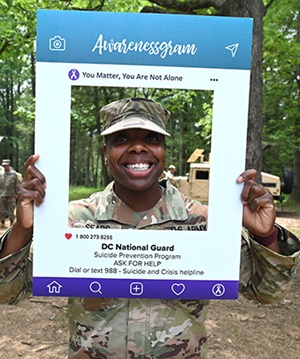 An Army National Guard member takes an “Awarenessgram” selfie at Fort Indiantown Gap, Pennsylvania, on June 5, 2025. The D.C. National Guard’s Risk Reduction program has introduced these suicide prevention selfies as a tool to encourage those who may be facing mental health challenges or suicidal thoughts. September is national Suicide Prevention Month. The Military Health System has many types of therapy and other resources for service members and families with mental health struggles or who are thinking about suicide. (Army National Guard photo by Master Sgt. Arthur M. Wright)
According to Military OneSource, times and events in military life when you can feel especially stressed include:
- Times nearing deployment or difficulty readjusting following deployment
- Loss of a family member, friend, or fellow service member
- Career setbacks, lack of advancement, or disciplinary actions
- Difficulty in relationships or family life
- Transitioning from military to civilian life
- Financial difficulty
- Major life changes
- Being young and unmarried without a supportive relationship
- Combat-related psychological injuries
- Heavy drinking or problematic substance use
- Medical health problems
- Negative attitude toward getting help
Military OneSource provides confidential counseling and support to service members and family members at no cost, available via phone or in person on and off installations. This is just one of many resources the DOD offers to all service members, families and military retirees.
Available MHS mental health resources
The MHS Mental Health Hub provides a comprehensive listing of mental health services available through the MHS. This includes ways to seek care, tips from experts, and in-depth information on available resources. You can connect directly to mental health support services near you with one click.
- Targeted Care: Many military mental health clinics are now using a process called Targeted Care. This connects you to the specific type of care you need after an initial evaluation — and can be an individual appointment, in-person group therapy or virtual group therapy, or virtual therapy. You can also receive referrals to nonmedical support such as a chaplain, financial advisor, or a military family life counselor.
- TRICARE covers mental health services through its worldwide network of civilian providers. To set up a mental health appointment through TRICARE, visit the mental health doctors and appointments page.
- Virtual care: The Defense Health Agency is also working to make mental health services available to service members at remote installations. One example is BRAVE, the DHA’s Behavioral Health Resources and Virtual Experience. This program offers tele-mental health services at 84 locations around the world by connecting a service member with a counselor through virtual sessions.
- inTransition is a confidential program that offers specialized coaching and assistance for active duty service members, National Guard and Reserve members, veterans, and retirees. It focuses on those receiving mental health or traumatic brain injury care who are experiencing disruption in their lives, like a PCS (permanent change of station) move, separation, or retirement.
- The Real Warriors Campaign is a DOD public health initiative. It strives to decrease stigma, increase psychological health literacy, and encourage early mental health help-seeking behaviors in the military community.
- CHAMP, the Uniformed Services University’s Consortium for Health and Military Performance, offers dozens of fact sheets, articles, and infographics to help you strengthen your mental health and grow from adversity or crisis.
- Mobile apps are there whenever needed, providing tools for coping, monitoring your health, and managing stress.
- The Brandon Act empowers service members to get the help they need confidentially by seeking a referral for a mental health evaluation through their commander or supervisor. This reduces the stigma associated with mental health.
- The Warrior Care Recovery Coordination Program, executed by the branches of service, provide holistic care to wounded, ill, or injured Service members and their families and caregivers. Recovery Care Coordinators serve as a guide through recovery, rehabilitation, and transition or reintegration by facilitating a comprehensive recovery plan. This plan covers needs associated with daily living, career, family, finances, health, legal, military, and spirituality.
The MHS is here to help
“The U.S. military wants to support you in your mental health journey. We’re there for you if you need to talk to someone, hit low points, or don’t know where to turn,” Orsega said.
“Together, we’re building a supportive military that knows strength includes the specific support you need, at the moment you need it most. Every service member, veteran, and family member should know: The MHS is here to help, because no one fights alone.”